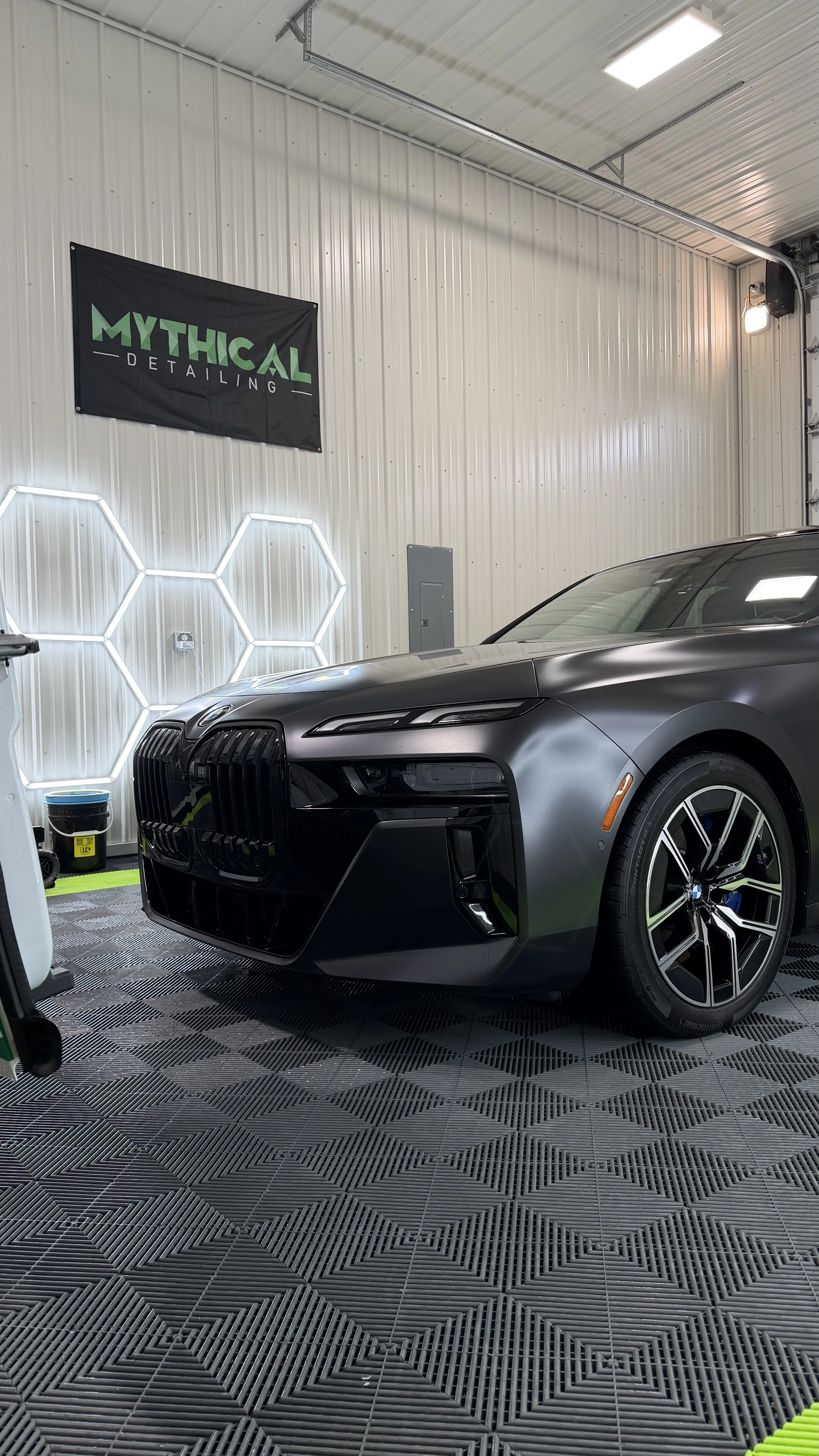
Why Fall Is the Right Window for Ceramic Coating
Every year we see the same pattern. Drivers think about paint protection in November, once the first cold snap hits and the salt trucks are already out. By then they're playing catch-up on paint that's already taking a beating.
Getting ceramic coating installed in September or October gives the coating time to fully cure before winter driving starts. It also means your car is protected for the entire season instead of just the back half of it. Our shop in Parkville is climate controlled, so we install coatings year-round, but earlier is still better when you're trying to beat the weather.
What Kansas City Winters Do to Unprotected Paint
Kansas City doesn't get the deepest snow in the country, but the mix of road salt, brine spray, and repeated freeze-thaw cycles is rough on a clear coat. Salt residue sits on the paint, picks up moisture, and accelerates oxidation and corrosion if it isn't washed off regularly. Add in sand and gravel kicked up from treated roads, and unprotected paint picks up fine scratches all winter long.
Bare paint also holds onto grime longer in cold weather because washing gets put off. Fewer washes plus more road contamination is exactly the combination that leads to dull, etched paint by spring.
| Winter Condition | Bare Paint | Ceramic Coated Paint |
|---|---|---|
| Road salt and brine | Bonds to paint, harder to remove | Rinses off more easily before it sits |
| Snow and ice removal | Scraping risks fine scratches | Slicker surface, less ice adhesion |
| Wash frequency needed | Frequent, hard to keep up with | Less frequent, faster when you do |
| Spring paint condition | Dull, etched, oxidized | Glossy, protected finish |
How Ceramic Coating Helps Through the Cold Months
A ceramic coating adds a hard, chemical-resistant layer on top of your clear coat. That layer keeps road salt and brine from bonding directly to your paint, which makes rinsing it off faster and reduces the chance it sits there and does damage. Water and slush also bead and sheet off a coated surface, which cuts down on how much grime clings to the car in the first place.
Coated paint is also easier to clear of light snow and ice, since the smoother surface gives ice less to grip. That doesn't mean you should skip scraping carefully, but it does mean less abrasion on the paint itself over a full winter of upkeep.
Correct the Paint Before You Coat It
If your paint already has swirl marks, light scratches, or oxidation from the summer, that needs to be addressed before coating, not after. A coating locks in whatever condition your paint is in when it's applied. Our paint correction process removes surface defects and restores clarity so the coating goes on top of paint that actually looks good, not paint that's just been sealed in rough shape.
For cars that don't need heavy correction, a lighter paint enhancement can still boost gloss and remove light haze before coating, without the time and cost of a full correction.
Maintaining Your Coating Once Winter Hits
Ceramic coating cuts down on maintenance, but it isn't a reason to skip washing altogether. We recommend rinsing off road salt within a few days of exposure, even when it's cold out. A quick rinse at a touchless wash is enough to keep brine from sitting on the surface for weeks at a time. Avoid automatic brush washes when possible, since they're harder on any finish, coated or not.
If you're a KC metro driver who doesn't want to deal with winter wash logistics at all, our mobile detailing service can come to you for maintenance washes through the season.
Ready to get ahead of winter? Get a free quote and we'll walk you through which ceramic coating package makes sense for your vehicle before the cold sets in.
Frequently Asked Questions
How far before winter should I get ceramic coating?
Aim for early to mid fall. Ceramic coatings need time to cure, and installation goes smoother in moderate temperatures than in the cold, wet days of late November and December. Booking in September or October gives the coating time to fully cure before the first hard freeze.
Does ceramic coating stop road salt from damaging my car?
Ceramic coating creates a slick, chemical-resistant barrier that keeps road salt and brine from bonding directly to your clear coat, and it makes rinsing salt residue off much easier. It does not make paint indestructible, so regular washing through winter still matters.
Can ceramic coating be applied in cold weather?
Coatings need a controlled, temperature-stable environment to bond and cure correctly. Our Parkville shop is climate controlled, so we can install coatings year-round, but scheduling before the coldest months still gives the coating more cure time before winter driving conditions start.
Do I still need to wash my car in winter if it's ceramic coated?
Yes. Ceramic coating reduces how much dirt, salt, and grime stick to your paint and makes washing faster, but it is not a substitute for regular washing. We recommend rinsing off road salt within a few days of exposure, even in cold weather.
Is paint correction necessary before winter ceramic coating?
If your paint has swirl marks, light scratches, or oxidation, correcting it before coating matters more before winter than any other time of year. Once a coating is applied over damaged paint, that damage is sealed in until the coating wears down.
Book your ceramic coating before winter road salt and freeze-thaw cycles start working on your paint. We'll help you pick the right package for how you drive.
Get a Free Quote →