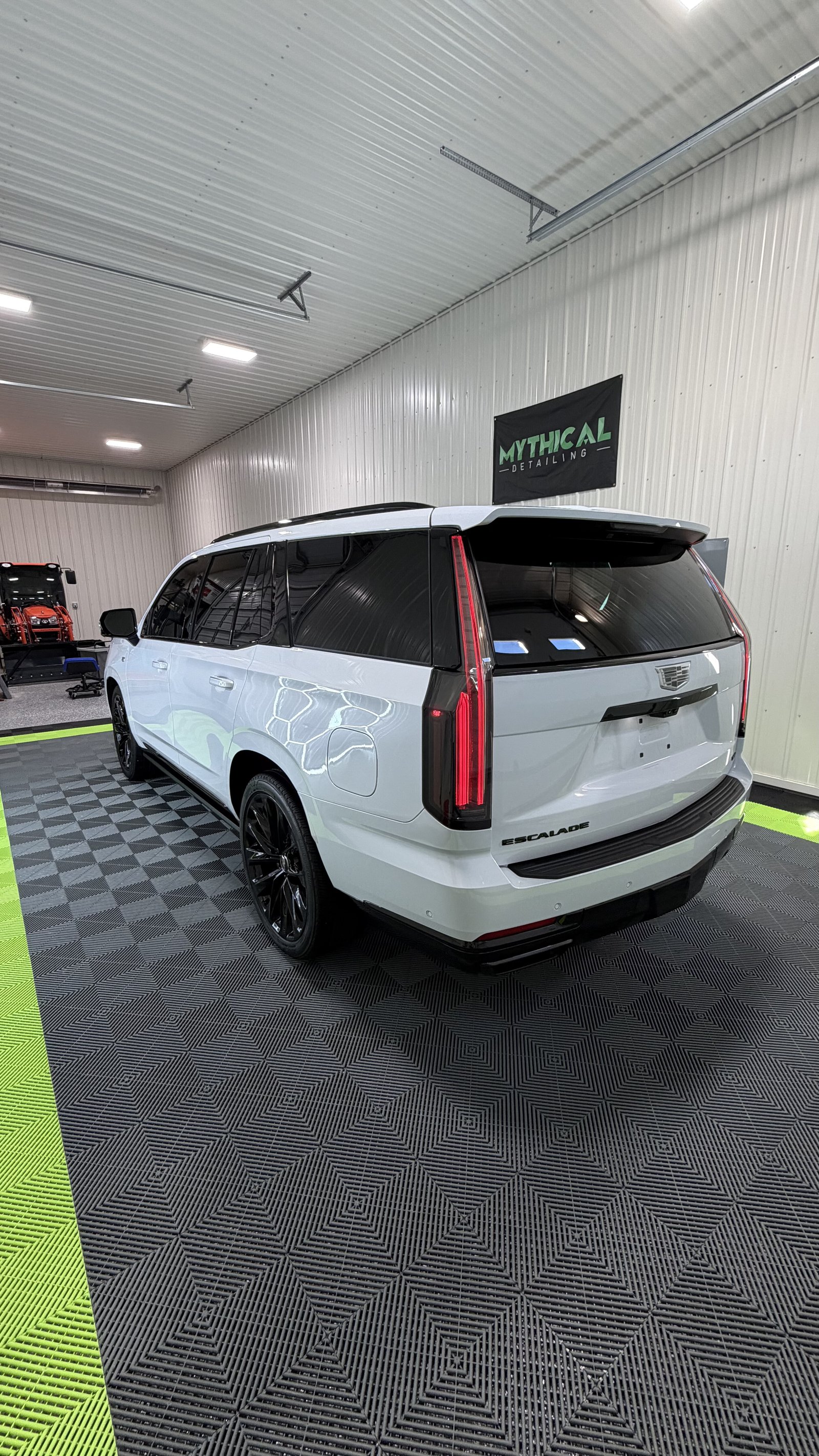
Why Road Salt Is Hard on Kansas City Paint
Missouri and Kansas both salt aggressively once ice shows up, and KC metro roads see repeated freeze-thaw cycles that keep brine on the pavement for days at a time. That salt splashes up onto your rocker panels, wheel wells, and lower doors every time you drive, and it doesn't wash off on its own. Left to sit, it pulls moisture into the clear coat and speeds up oxidation, which is why so many daily drivers in the area look dull and pitted by spring.
The problem isn't one storm. It's the accumulation over a season of driving through slush, parking on salted lots, and never getting a real wash in between.
How Ceramic Coating Changes the Equation
A properly applied ceramic coating bonds to the clear coat and creates a hard, slick surface that salt brine has a much harder time gripping. Instead of soaking in, grime and salt residue sit on top of the coating and rinse away with far less scrubbing. That matters in winter because most people aren't washing their car as often as they should, and a coated surface tolerates that gap better than bare paint.
The added hardness also helps resist the fine scratching that comes from repeated contact with road grit and salt crystals during quick wipe-downs or automatic car washes.
What Ceramic Coating Won't Do
It's not a force field. Ceramic coating protects the painted surface, but it doesn't reach your undercarriage, exhaust, or the metal components underneath the vehicle where most structural rust actually starts. It also won't stop rock chips or stone damage from winter road debris. If chip protection on high-impact areas like the front bumper and hood is a priority, that's a conversation about paint protection film, not ceramic coating.
Coating also isn't permanent. Depending on the Core, Signature, or Ultimate package, protection is rated for a set number of years, and how well it holds up depends partly on maintenance.
Maintaining Your Coating Through Winter
Salt season calls for more frequent rinses, not more product. A quick rinse of the lower panels and wheel wells every week or two, especially after a storm, keeps brine from sitting on the coating longer than it needs to. Avoid harsh degreasers on painted surfaces and skip automatic car washes with worn-out brushes, since those do more damage than the salt itself.
If you're not sure what your coating can handle, our maintenance plan covers seasonal check-ins so you're not guessing.
Getting Coated Before the Cold Sets In
Ceramic coating needs a clean, dry, temperature-controlled space to cure properly, which is exactly what our Parkville shop is set up for regardless of what's happening outside. If your paint isn't protected yet, getting it done now means you're covered for the entire salt season instead of trying to catch up in January. If you're also dealing with existing swirl marks or oxidation, a paint correction beforehand gives the coating a clean surface to bond to.
Ready to get your vehicle protected before the first freeze? Get a free quote and we'll walk you through the right package for how you drive.
Frequently Asked Questions
Does ceramic coating stop road salt from damaging paint?
Ceramic coating creates a hard, slick barrier that keeps salt brine from bonding directly to your clear coat, which makes it far easier to rinse off before it sits and does damage. It doesn't make paint immune to salt, but it buys you time and cuts down on etching from prolonged exposure.
Can I still get salt corrosion with a ceramic coating?
Yes, especially on unprotected metal underneath the vehicle, wheel wells, and exposed trim. Ceramic coating on painted panels reduces surface-level etching and staining, but it doesn't reach the undercarriage or seal every joint and seam.
How often should I wash my car in the winter with ceramic coating?
Every one to two weeks during active salt season, and sooner after a storm where crews have heavily treated the roads. A coated surface releases dirt and brine faster than bare paint, so washes take less time and use less product.
Is it too late to get ceramic coating once winter starts?
No, but application requires a clean, dry, temperature-controlled environment, which is exactly what our Parkville shop provides. Getting it done before the first hard freeze just means your paint is protected for the entire season instead of catching up partway through.
Does ceramic coating protect against rock chips from road debris?
No. Ceramic coating is a chemical-resistant, hydrophobic layer, not an impact-resistant film. If rock chip protection is a priority for winter driving, paint protection film is the better option for high-impact areas like the front bumper and hood.
We'll assess your paint's condition and recommend the right ceramic coating package before the first freeze hits Kansas City.
Get a Free Quote →