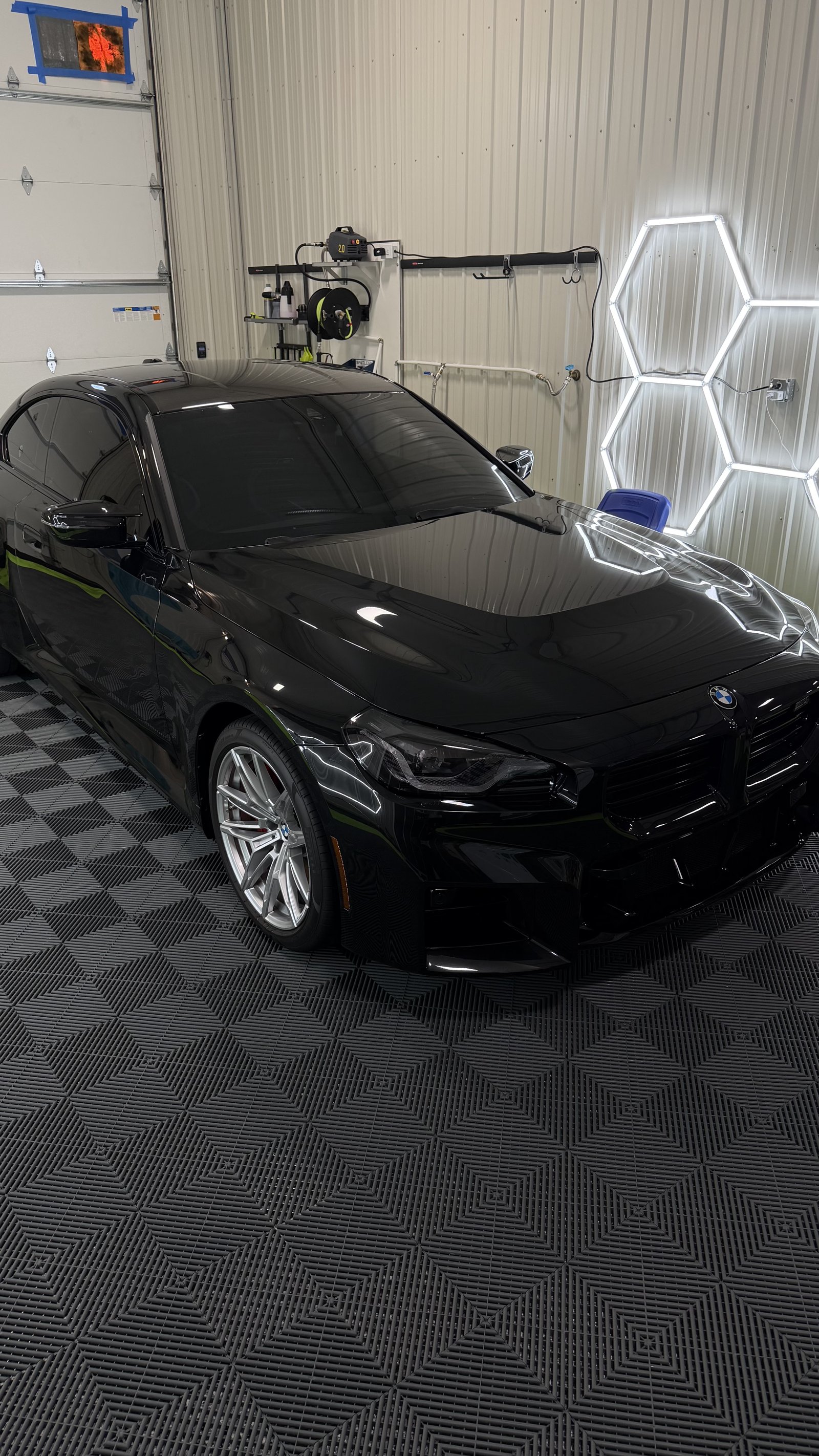
Why Fall Is Hard on Parked Cars
Anyone who parks under or near trees in Parkville or the KC metro knows the fall routine: leaves on the windshield, sap on the hood, and the occasional bird dropping on the roof. It's easy to treat all of that as a quick wipe-down problem, but sap and droppings are both acidic, and acidic residue sitting on clear coat in direct sun does real damage over time.
The sun is the part people miss. A warm afternoon bakes sap into a hardened, sticky spot that bonds to the clear coat instead of just sitting on top of it. The longer it's there, the harder it is to remove without leaving a mark behind.
What Tree Sap and Bird Droppings Actually Do to Clear Coat
Tree sap is a mix of sugars and acids that starts soft and sticky, then hardens as it dries. As it cures in the sun, it can etch a shallow ring into the clear coat, especially on paint that's already lost some of its protective gloss. Bird droppings work faster because they're more acidic and can start etching within a few hours on a hot day.
Once that etching happens, washing won't fix it. The mark is physically in the clear coat, not on top of it, which means it needs paint correction to level the surface back out.
How Ceramic Coating Changes the Equation
A ceramic coating adds a hard, slick layer on top of the clear coat that sap and droppings have a much harder time bonding to. Instead of curing into the paint, most residue sits closer to the surface and wipes away with a quick rinse, even after sitting through an afternoon.
That doesn't mean a coated car can go all fall without a wash. It means you have more time before residue turns into permanent damage, which matters if you park under trees at work or at home and can't control when things fall.
Bare Paint vs. Ceramic Coated Paint This Time of Year
| Scenario | Bare Clear Coat | Ceramic Coated Paint |
|---|---|---|
| Sap sits for a few days | High risk of etching | Low risk, usually wipes clean |
| Bird dropping in direct sun | Can etch within hours | More time before it bonds |
| Regular fall washing | Needed weekly, still risks marks | Faster washes, fewer surprises |
Simple Habits That Help Either Way
- Don't let sap, droppings, or wet leaves sit for more than a day or two if you can help it.
- Rinse with water first rather than wiping dry, which can grind debris into the paint.
- Park away from trees when you have the choice, especially during peak leaf drop.
- Wash every one to two weeks through fall instead of stretching it out.
None of this replaces a coating, but it's the difference between a coating doing its job easily and a coating fighting an uphill battle against months of neglect.
Getting Ahead of Winter While You're At It
Fall is also the last easy window before winter brings road salt and slush into the mix. If your paint already has swirl marks or light etching from a previous season, this is a good time for a paint correction pass before locking in a coating, rather than sealing existing damage under a new layer.
If you're not sure whether your paint needs correction first or is ready for a coating as-is, get a free quote and we'll take a look before recommending anything.
Frequently Asked Questions
Can tree sap actually damage car paint?
Yes. Tree sap is acidic and bonds to clear coat as it dries in the sun. Left on for days or weeks, it can etch a mark into the clear coat that no amount of washing removes, requiring paint correction to fix.
Does ceramic coating stop sap and bird droppings from staining paint?
Ceramic coating creates a slicker, more chemical-resistant surface, so sap, sap residue, and bird droppings are far less likely to bond to the clear coat and much easier to wipe off before they etch in. It doesn't make paint immune, but it buys you time you don't have with bare clear coat.
How often should I wash my car during fall in Kansas City?
If you park under or near trees, a wash every one to two weeks during peak leaf drop is a reasonable baseline. A coated car makes those washes faster and lowers the odds that anything sitting on the paint has time to bond.
Is it too late to get ceramic coating before winter?
No. Fall is one of the better times to have it done, since it protects your paint through the rest of leaf season and into winter road salt and slush before either one has a chance to cause damage.
What should I do if sap is already stuck on my paint?
Don't scrape it. Soften it with a dedicated tar and sap remover or warm water and a microfiber towel, then check the spot for etching once it's off. If the clear coat looks dull or textured underneath, that area likely needs paint correction.
Get a free quote on paint correction and ceramic coating before sap, leaves, and road salt have a chance to do damage.
Get a Free Quote →