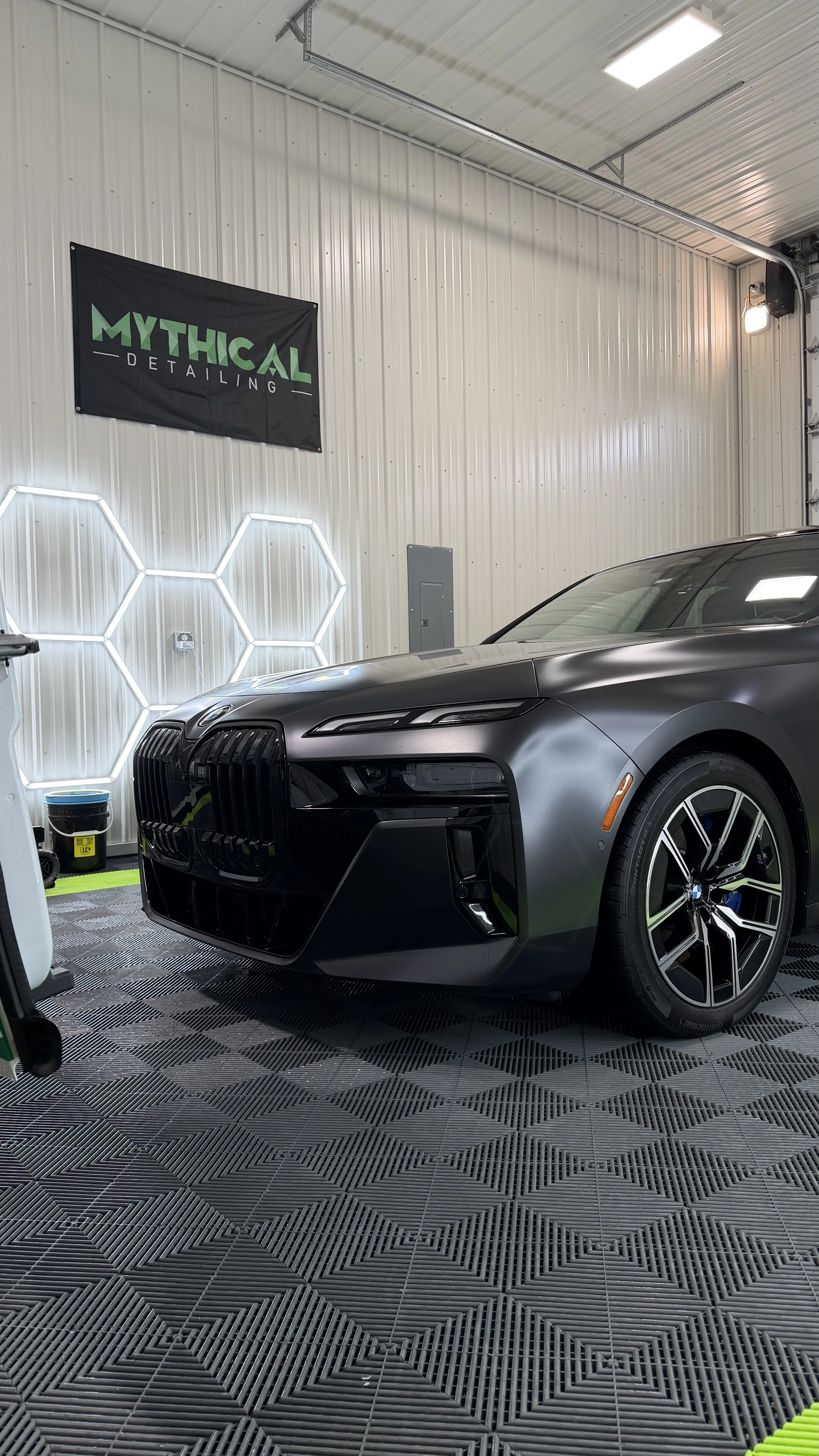
Why Kansas City Water Is Rough on Paint
Kansas City municipal water runs harder than a lot of the country, which means it carries more dissolved calcium and magnesium. That's not a problem in your glass or your sink, but on a hot hood or trunk lid it's a different story. When a bead of hard water sits and evaporates, the minerals inside it don't go anywhere. They get left behind as a chalky ring or spot on the clear coat.
Summer makes it worse. High temperatures speed up evaporation, so a sprinkler pass, a quick rinse, or even a rainstorm followed by sun can leave spots within minutes if the car isn't dried. We see this constantly on vehicles that get parked outside around Parkville and the rest of the KC metro.
What's Actually Happening to the Paint
Water spotting happens in stages. At first, the mineral residue just sits on top of the clear coat, and a normal wash lifts it right off. Left alone through repeated wet-dry cycles, though, those minerals can start to etch into the clear coat itself. At that point washing alone won't remove them, and the surface needs mechanical correction to level back out.
This is the difference between a spot you wipe away and a spot you have to correct. Catching it early costs a lot less than fixing it late.
How Ceramic Coating Changes the Equation
A ceramic coating creates a smoother, denser surface than bare clear coat. Water beads tighter and sheets off faster instead of spreading out and clinging to the paint. That matters because less surface area of standing water means less area for minerals to concentrate as it evaporates.
Coated paint is also easier to clean. Because contaminants sit on top of the coating rather than bonding directly to the clear coat, a quick rinse or wipe-down pulls water spots and light residue off far more easily than it would on unprotected paint. For KC drivers dealing with sprinklers, storms, and a car wash that only gets used every few weeks, that difference adds up over a season.
What Ceramic Coating Won't Do
We're not going to tell you a coating makes your car spot-proof, because it doesn't. If water is left to bake dry on any surface, coated or not, mineral deposits can still form. A coating buys you a wider margin for error and makes cleanup easier. It doesn't remove the need to rinse and dry your car after it sits under a sprinkler or through a storm.
It also doesn't undo existing damage. If your paint already has etched water spots or swirling from years of improper washing, that needs paint correction before a coating goes on. Coating over damaged paint just locks in the imperfections under a glossy layer.
Keeping Coated Paint Clean Through a Kansas City Summer
- Rinse promptly after sprinkler exposure or a storm rather than letting water sit and dry in the sun.
- Dry with a clean microfiber towel or touchless dryer instead of letting panels air dry.
- Use a pH-neutral wash soap so you're not stripping the coating's hydrophobic properties over time.
- Avoid parking under sprinkler lines when you have a choice. Repeated hard water exposure in the same spot accelerates spotting.
- Book a maintenance wash periodically to keep the coating performing the way it's meant to.
Protecting Your Investment
If your car already shows early spotting, it's worth having it looked at before it turns into something a wash can't fix. Our ceramic coating packages range from a 3-5 year Core option up to a 9-year Ultimate package, and we start every job with a full inspection so you know exactly what your paint needs. Get a free quote and we'll walk you through the right option for your vehicle.
Frequently Asked Questions
Does ceramic coating completely stop water spots?
No. Ceramic coating reduces how much water clings to your paint and makes mineral deposits easier to remove, but it does not make your car immune to hard water etching. Water left to dry on any surface, coated or not, can still leave marks.
Why is Kansas City water so hard on car paint?
Kansas City municipal water carries a higher mineral content than soft water areas. When it evaporates on a hot panel, it leaves behind calcium and magnesium deposits that sit on top of the clear coat and can etch in if not removed.
How soon after ceramic coating can I wash my car?
We'll give you a specific cure timeline based on the product used, but most coatings need at least several days to fully cure before their first wash. We cover this during your vehicle pickup.
Can water spots be removed once they've etched into the clear coat?
Light deposits usually lift with a proper decontamination wash. Etched spots that have bonded to the clear coat typically need paint correction to level the surface and restore clarity.
What's the best way to dry a ceramic coated car?
A clean microfiber drying towel or a touchless dryer works best. Coated paint sheets water more efficiently than bare paint, which cuts drying time, but panels should still be dried promptly rather than left to air dry in the sun.
Get your paint inspected and protected with a ceramic coating built for Kansas City conditions.
Get a Free Quote →