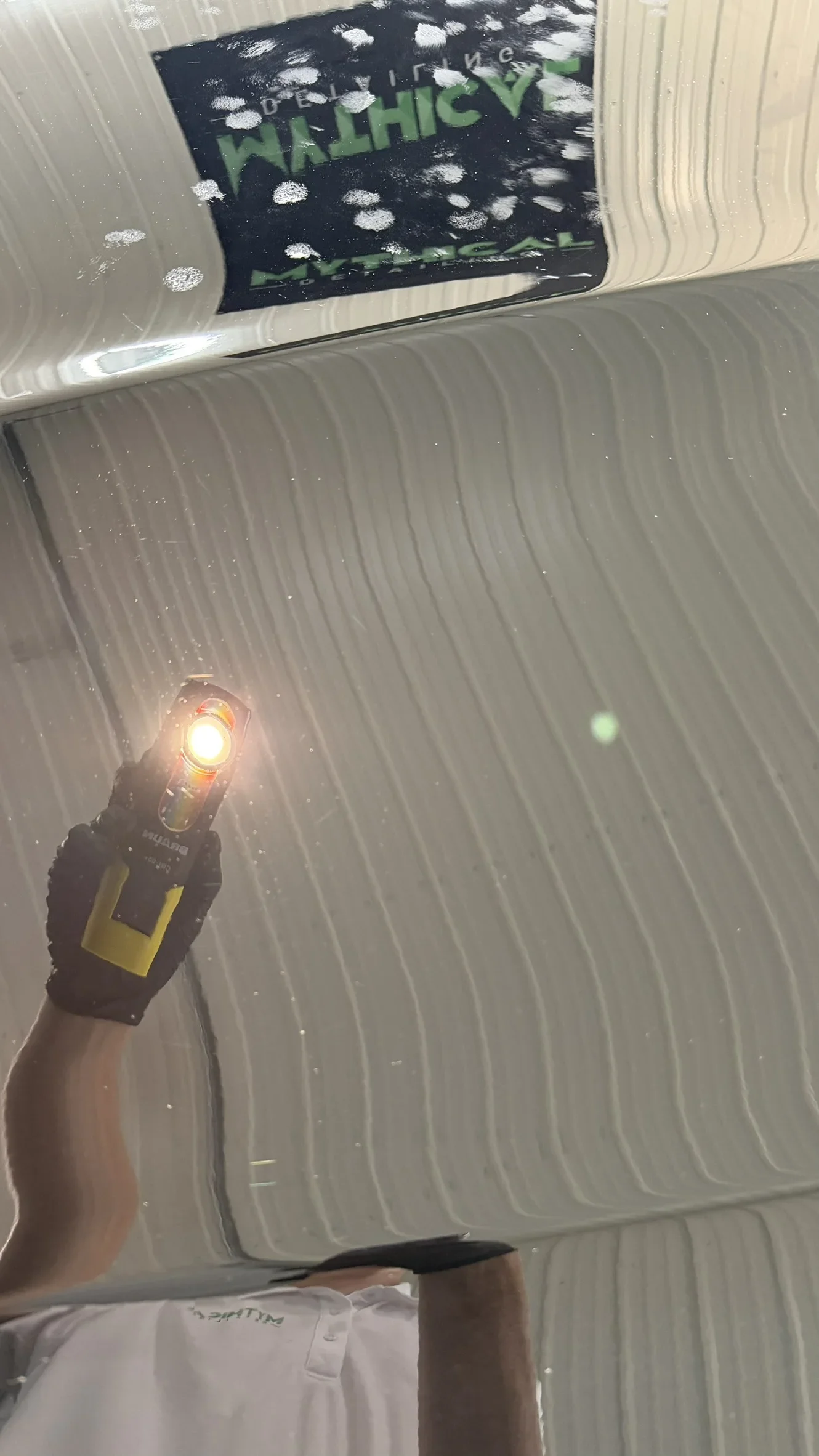
What Paint Correction Actually Does
Paint correction is the process of removing defects from your clear coat: swirl marks, wash-induced scratches, water spots, oxidation, and haze. It's done with a polisher, cutting or polishing compounds, and pads matched to the paint's hardness. The goal is a flat, defect-free surface with true reflection and depth, not just a quick shine.
The confusion usually starts here: not every car needs the same amount of work to get there. That's where one-step and two-step correction come in, and they're not interchangeable.
One-Step Paint Correction: What It Fixes
One-step correction is a single polishing pass, usually with a light cutting or finishing compound. It's built for paint that's in decent shape already: light swirls from automatic car washes, minor wash marks, and dullness from age or improper washing. It boosts gloss and clarity without stripping much clear coat.
This is also the process we recommend for daily drivers that get washed regularly and just need refreshing before a ceramic coating is applied. If you're not chasing perfection, just a noticeably cleaner, glossier finish, one-step gets you most of the way there in a fraction of the time.
Two-Step Paint Correction: What It Fixes
Two-step correction adds a compounding stage before the polishing stage. The compound cuts deeper into the clear coat to remove moderate swirls, scratches you can feel with a fingernail, and heavier oxidation. The polishing stage that follows refines the paint back to a clear, high-gloss finish.
This is the process for cars that have been through years of automatic washes, sat outside without regular care, or show visible spiderwebbing under sunlight. It takes longer and costs more than one-step, but it's the only way to actually remove those deeper defects instead of just masking them.
How to Tell Which One Your Car Needs
Take your car outside on a sunny day and look at the paint at a low angle, ideally with the sun directly behind you hitting the hood or door panel. A few things to check:
- Light haze or faint circular marks only: one-step is likely enough.
- Visible swirls in a spiderweb pattern across most panels: you need two-step.
- Scratches you can catch with a fingernail: two-step, and even then, deep ones may not fully remove.
- Dull, chalky, or oxidized paint (common on red and darker colors): two-step.
If you're not sure, an in-person inspection under proper lighting is the only reliable way to know. We check every vehicle before quoting so you're not paying for more correction than your paint actually needs, or less than it does.
| Factor | One-Step | Two-Step |
|---|---|---|
| Best for | Light swirls, wash marks, dull finish | Moderate swirls, scratches, oxidation |
| Process | Single polishing pass | Compound stage + polishing stage |
| Time on the car | Half day, depending on size | Full day or more |
| Result | Improved gloss and clarity | Near-full defect removal, maximum gloss |
Correct Before You Coat
If you're planning on ceramic coating, correction should always come first. A coating is a clear, hard layer that sits on top of your existing paint. Whatever swirls or haze are there when the coating goes on will still be there, just sealed under it, for years. Getting the correction level right up front saves you from looking at locked-in defects down the road.
If your paint isn't quite ready for full correction but doesn't need heavy cutting either, our paint enhancement service is a lighter middle option worth asking about.
Not sure which process fits your car? Get a free quote and we'll walk you through it after a real inspection, not a guess over the phone.
Frequently Asked Questions
How do I know if my car needs one-step or two-step correction?
If your paint looks fairly clean under direct sunlight with only light wash marks or haze, one-step correction is usually enough. If you see deeper swirls, scratches you can catch a fingernail on, or heavy oxidation, you need two-step correction.
How long does two-step paint correction take?
Two-step correction typically takes a full day or more depending on vehicle size and paint condition, since it involves a compounding stage followed by a separate polishing stage on every panel.
Will paint correction remove all scratches?
Paint correction removes swirls and scratches that sit within the clear coat. Deep scratches that go through the clear coat into the base color or primer cannot be corrected and need touch-up paint or a repaint instead.
Should I do paint correction before ceramic coating?
Yes. Ceramic coating locks in whatever the paint looks like underneath it. Correcting the paint first means the coating seals in a smooth, glossy surface instead of sealing in existing swirls and haze.
Is one-step correction worth it if my car has swirls?
One-step correction improves gloss and removes light defects but will not fully remove moderate to heavy swirls. If the swirls are noticeable in sunlight, two-step correction is the better investment.
We inspect every vehicle under proper lighting before quoting, so you get the right process for your paint, not an upsell.
Get a Free Quote →