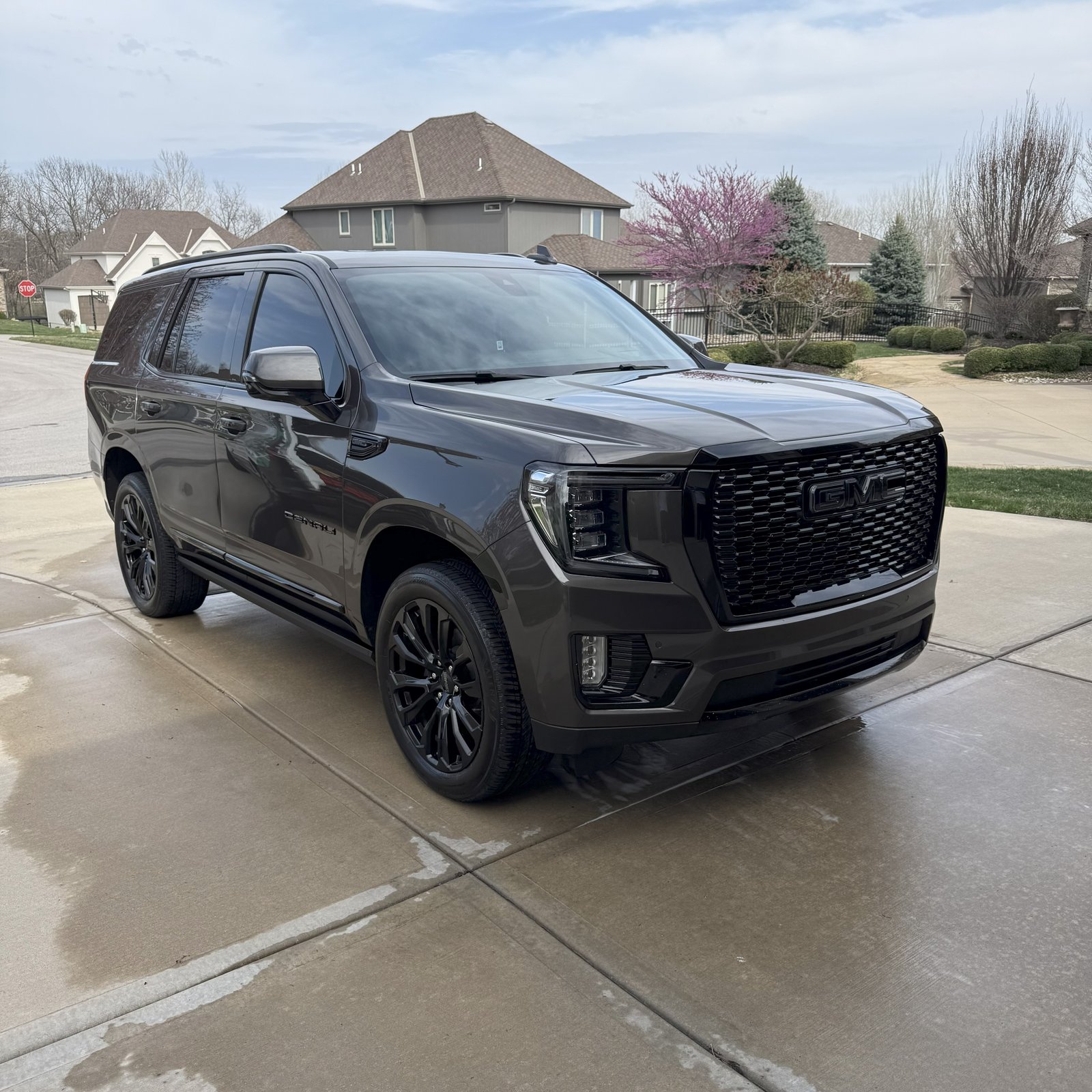
Why Larger Vehicles Need a Different Approach
An SUV or full-size truck has significantly more painted surface area than a sedan or coupe. That changes the math on prep time, product volume, and how long the vehicle needs to sit in the shop. It's the same reason a house painter charges differently for a two-story home versus a ranch. The coating chemistry doesn't change, but the labor behind it does.
We see a steady mix of Tahoes, Yukons, F-150s, and Broncos come through our Parkville shop, and each one gets treated as its own project. Wheel wells, running boards, and taller door panels all add time that a smaller car wouldn't need.
More Surface Area, More Considerations for Pricing
Most ceramic coating shops quote SUVs and trucks toward the higher end of their pricing range, and we're no different. The coating itself covers more square footage, decontamination and polishing steps take longer, and taller vehicles require more physical effort to correct evenly from roof to rocker panel.
If you're comparing quotes, ask whether the number you're given already accounts for your vehicle's size. A price built around a compact sedan won't hold up once the tech is standing in front of a Suburban.
Trucks and Work Vehicles: Protecting Paint That Takes a Beating
Trucks used for towing, hauling, or daily job-site duty accumulate a different kind of wear than a garage-kept car. Road film, brake dust, and repeated washing at commercial car washes all take a toll on clear coat over time. A ceramic coating won't stop rock chips or bed liner scuffing, but it does make the paint easier to rinse clean and less prone to holding onto grime between washes.
For owners who use their truck for work, we're upfront about what a coating can and can't do. It's a maintenance advantage, not a suit of armor.
Choosing the Right Package for Your SUV or Truck
We offer three coating tiers, and the right one for a larger vehicle usually comes down to how long you plan to keep it and how it's used day to day.
| Package | Protection Window | Best For |
|---|---|---|
| Core | 3-5 years | Daily drivers, budget-conscious owners |
| Signature | 5-7 years | Family SUVs, vehicles kept long-term |
| Ultimate | Up to 9 years | Trucks and SUVs meant to last, work vehicles |
See the full breakdown of what's included in each tier on our ceramic coating services page, or talk to us directly if you're not sure which fits your vehicle.
Prep Work Matters More on Larger Vehicles
Because SUVs and trucks have more surface to inspect, skipped prep work shows up faster. Swirl marks on a hood are one thing, but a truck with years of automatic car washes often has contamination and light scratching across every panel. We wash, decontaminate, and evaluate the paint before recommending a one-step or two-step correction ahead of coating. Correcting first means the gloss and clarity you get from the coating actually reflects the paint underneath it, not the swirl marks hiding under a layer of ceramic.
Maintaining a Ceramic Coated SUV or Truck
Maintenance washing works the same regardless of vehicle size, but there's more of it to do. Stick to pH-neutral soap, a two-bucket method or foam cannon, and microfiber towels. Trucks that see gravel roads or job sites benefit from more frequent rinses to keep abrasive grit from sitting on the coated surface.
If you're weighing whether a coating makes sense for your SUV or truck, our team can walk through your paint's condition and give you a straight answer. Get a free quote and we'll go over pricing based on your specific vehicle, not a generic estimate.
Frequently Asked Questions
Does ceramic coating cost more for an SUV or truck?
Do trucks need paint correction before ceramic coating?
Can ceramic coating help with a truck bed or tailgate?
Is ceramic coating worth it on a work truck?
How long does it take to coat an SUV or truck?
SUVs and trucks aren't priced like sedans. Tell us what you're driving and we'll give you a number that reflects the actual job.
Get a Free Quote →