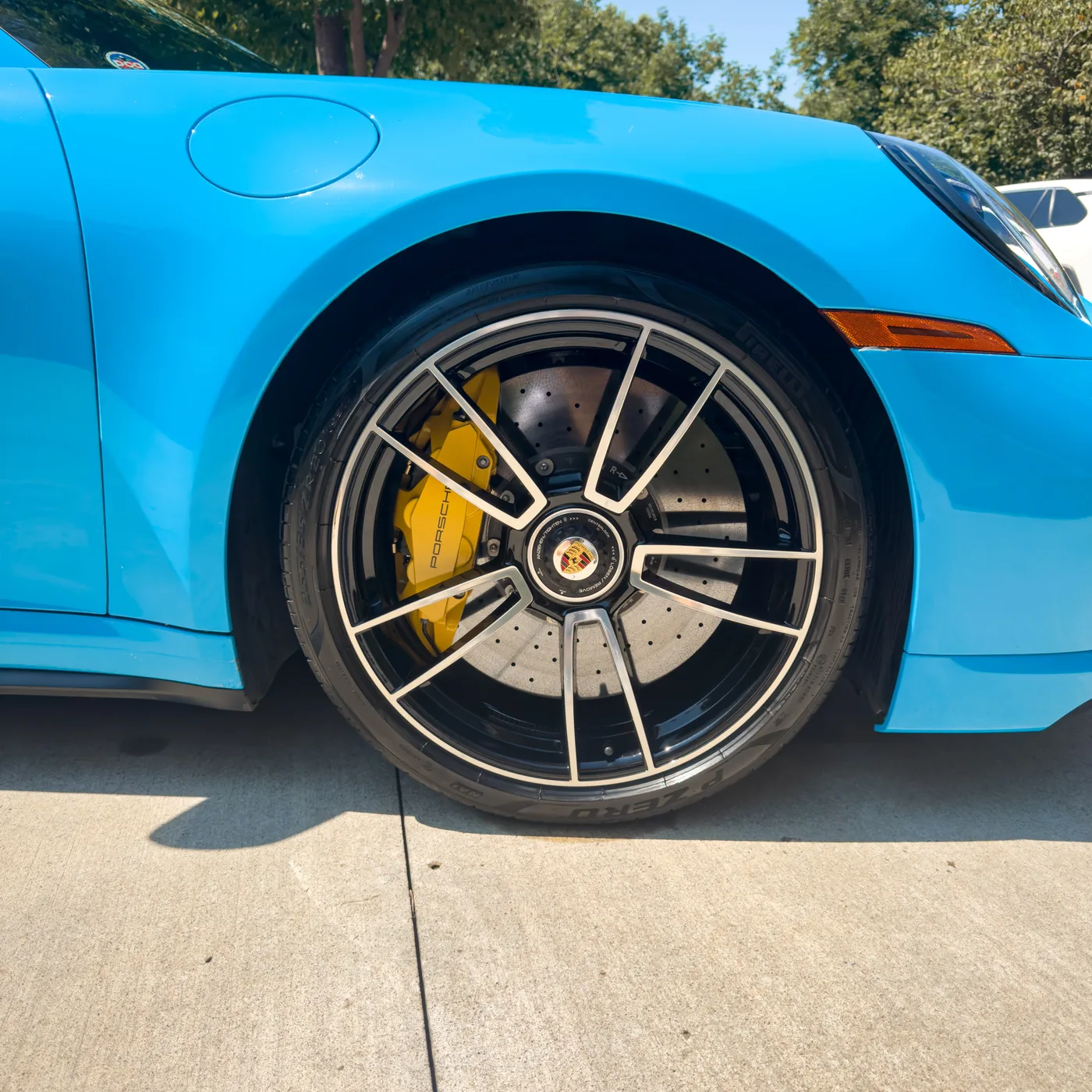
Why Wheels Take More Abuse Than Paint
Paint deals with UV exposure, bugs, and the occasional bird dropping. Wheels deal with all of that plus something worse: brake dust. Every time you brake, your rotors and pads shed metallic particles that land on the wheel face while it is still hot. That combination of heat and metallic contamination is more corrosive than almost anything your paint encounters.
Add in winter road treatment, which is heavy in the Kansas City area from December through March, and wheels are fighting a losing battle against a finish that dulls, pits, and stains faster than the rest of the car. By the time most owners notice the wheels look worse than the paint, the clear coat on the wheel has already started to break down.
What Wheel Ceramic Coating Actually Does
A wheel coating is a sacrificial, chemically resistant layer bonded to the wheel's surface. It does not stop brake dust from landing on the wheel, but it keeps that dust from baking on and bonding the way it does on an unprotected finish. The practical result is that a rinse or a light wash pulls most of the grime off instead of requiring a stiff brush and an acid-based wheel cleaner.
That matters for the wheel's finish over time. Acidic wheel cleaners are effective at cutting brake dust, but repeated use etches clear coat and dulls polished or chrome finishes. A coated wheel needs less aggressive cleaning, which means the finish itself lasts longer.
Wheel Coating vs. No Coating
| Factor | Uncoated Wheel | Ceramic Coated Wheel |
|---|---|---|
| Brake dust bonding | Bakes on, builds up fast | Sits on top, rinses off easily |
| Cleaning method needed | Acidic cleaner, brush, scrubbing | Rinse or mild soap in most cases |
| Clear coat wear from cleaning | Accelerated by harsh cleaners | Slowed since less scrubbing is needed |
| Gloss retention | Fades and dulls over 1-2 years | Holds gloss significantly longer |
What the Wheel Ceramic Coating Process Looks Like
Wheel coating starts with a full decontamination, not just a wash. We use an iron remover to dissolve embedded brake dust particles, clay the surface to pull remaining contamination, and inspect for any existing corrosion or clear coat damage before moving forward. Coating over contamination just traps the problem underneath a clear layer, so this step is not optional.
Once the wheel is clean and dry, we apply the coating in controlled layers and allow proper cure time before the vehicle goes back on the road. Depending on the wheel design, coverage can include the face and outer barrel with wheels mounted, or the full barrel and inner lip if the wheels come off. Coverage decisions come down to how the wheel is designed and how much of it is actually visible day to day.
How Long It Lasts and What Maintenance Looks Like
A professionally applied wheel coating typically holds up for one to two years under normal Kansas City driving conditions, including winter road treatment. Wheels see more contamination than paint, so it is normal for a wheel coating to need a refresh before a paint coating does. The maintenance routine that keeps it performing is simple: regular rinsing, mild soap instead of acidic wheel cleaner, and avoiding stiff-bristle brushes that can wear down the coating faster than intended.
Wheel coating pairs well with a full ceramic coating package on the paint, since both are addressing the same underlying problem: contamination bonding to a surface and being difficult to remove without damaging the finish underneath.
If your wheels are looking dull, staining, or taking longer to clean than they should, a free quote is the fastest way to find out what condition they are in and what coating package fits your vehicle and your budget.
Frequently Asked Questions
Is wheel ceramic coating different from paint ceramic coating?
Yes. Wheel coatings are formulated for the higher heat wheels are exposed to from braking and for constant exposure to brake dust, which is more corrosive than typical road grime. The application method and prep are similar to paint coating, but the product itself is built for a tougher environment.
How long does wheel ceramic coating last?
With regular washing and no aggressive wheel cleaners, a professionally applied wheel coating typically holds up for one to two years before it needs a refresh. Wheels facing daily brake dust and winter road treatment tend to see wear sooner than paint.
Do I need my wheels off the car for coating?
It depends on the wheel design and how much barrel and inner lip coverage you want. Face and outer barrel coating can usually be done with wheels mounted. Full barrel coverage, including the inside of the wheel, requires the wheels off.
Will wheel coating stop brake dust from sticking?
It will not stop brake dust from landing on the wheel, but it keeps dust and grime from bonding to the surface the way they do on bare or clear coated wheels. That means a rinse or light wash removes most of it instead of needing scrubbing.
Is wheel ceramic coating worth it for a daily driver?
For a daily driver in Kansas City, wheel coating is one of the more practical upgrades available. Wheels take more contamination than any other exterior surface, and coated wheels cut down on the scrubbing needed to keep them looking correct week to week.
We decontaminate, inspect, and coat wheels to hold up against Kansas City brake dust and road grime. Get a quote based on your wheel design and driving conditions.
Get a Free Quote →